

Question 1
A company uses Amazon API Gateway to manage its REST APIs that third-party service providers access. The company must protect the REST APIs from SQL injection and cross site scripting attacks
What is the MOST operationally efficient solution that meets these requirements?
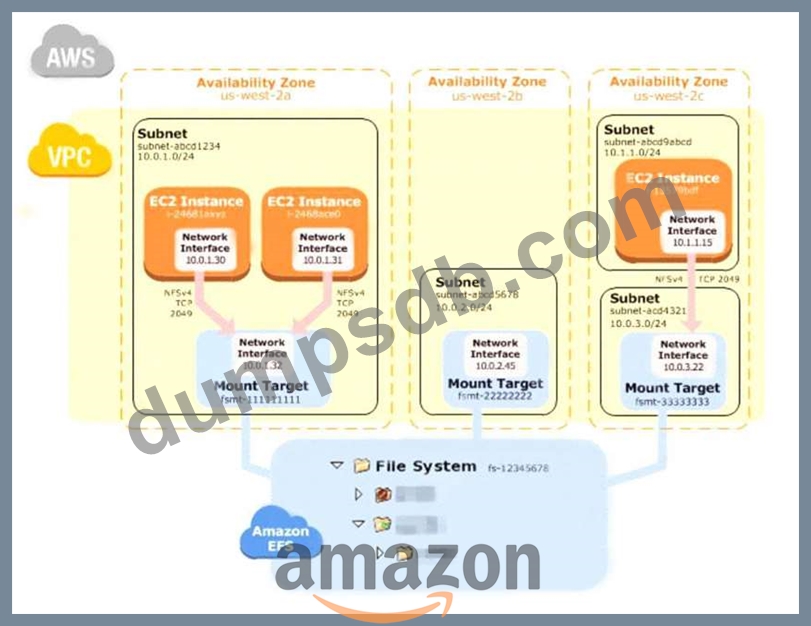
Question 2
A company is deploying an application that processes streaming data in near-teal time. The company plans to use Amazon EC2 instances for the workload The network architecture must be configurable to provide the lowest possible latency between nodes.
Which networking solution meets these requirements?
Question 3
A company's web application is using multiple Linux Amazon EC2 instances and storing data on Amazon EBS volumes. The company is looking for a solution to increase the resiliency of the application in case of a failure and to provide storage that complies with atomicity, consistency, isolation, and durability (ACID).
What should a solutions architect do to meet these requirements?
Question 4
A group requires permissions to list an Amazon S3 bucket and delete objects from that bucket An administrator has created the following IAK1 policy to provide access to the bucket and applied that policy to the group. The group is not able to delete objects in the bucket. The company follows least-privilege access rules.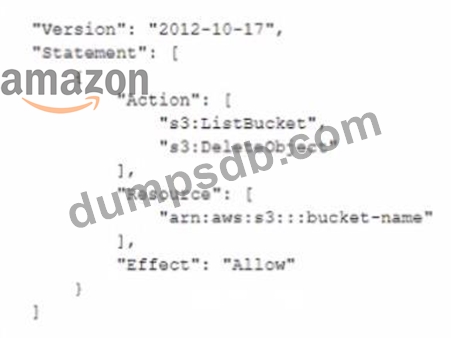
Which statement should a solutions architect add to the policy to correct bucket access?
A)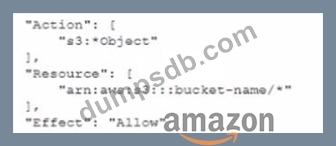
B)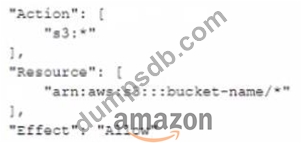
C)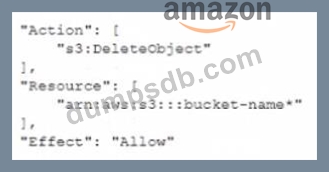
D)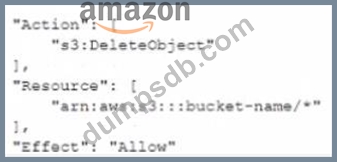
Question 5
A company hosts an application on multiple Amazon EC2 instances.
The application processes messages from an Amazon SQS queue writes to an Amazon RDS table and deletes the message from the queue Occasional duplicate records are found in the RDS table.
The SQS queue does not contain any duplicate messages.
What should a solutions archived do to ensure messages are being processed once only?