

Question 81
A national cybersecurity agency receives threat-intelligence data in STIX format related to a series of cyberattacks targeting critical infrastructure. The STIX data includes indicators such as malware file hashes, malicious IP addresses, and attack patterns associated with the attacks. The agency's mission is to analyze the data and take proactive measures to safeguard the nation's critical infrastructure. How should the agency leverage the STIX format to enhance threat analysis and response effectively?
Question 82
Refer to the exhibit.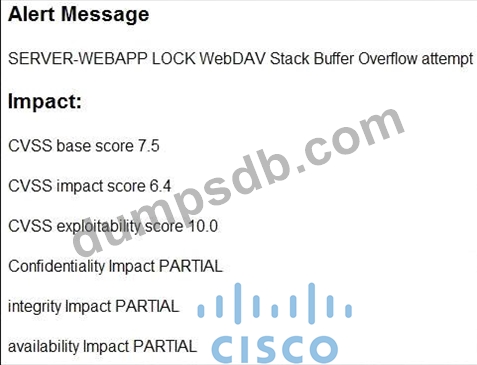
After a cyber attack, an engineer is analyzing an alert that was missed on the intrusion detection system. The attack exploited a vulnerability in a business-critical, web-based application and violated its availability.
Which two mitigation techniques should the engineer recommend? (Choose two.)
Question 83
Refer to the exhibit.
Which registry key is suspected of being used by an attacker to establish persistence?
Question 84
A security team receives reports of multiple files causing suspicious activity on users' workstations. The file attempted to access highly confidential information in a centralized file server. Which two actions should be taken by a security analyst to evaluate the file in a sandbox? (Choose two.)
Question 85
A security team received an alert of suspicious activity on a user's Internet browser. The user's anti-virus software indicated that the file attempted to create a fake recycle bin folder and connect to an external IP address. Which two actions should be taken by the security analyst with the executable file for further analysis? (Choose two.)