Question 171
You have two Azure virtual networks in the East US Azure region as shown in the following table.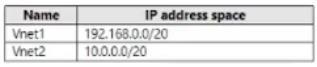
The virtual networks are peered to one another. Each virtual network contains four subnets.
You plan to deploy a virtual machine named VM1 that will inspect and route traffic between all the subnets on both the virtual networks.
What is the minimum number of IP addresses that you must assign to VM1?
Question 172
You have an Azure subscription that contains a resource group named RG1 and a virtual network named VNet1 You need to deploy Azure Firewall to RG1. The solution must minimize administrative effort What should you do first?
Question 173
You have an Azure virtual network named Vnet1 that has one subnet. Vnet1 is in the West Europe Azure region.
You deploy an Azure App Service app named App1 to the West Europe region.
You need to provide App1 with access to the resources in Vnet1. The solution must minimize costs.
What should you do first?
Question 174
You have an Azure virtual network named Vnet1 that contains two subnets named Subnet1 and Subnet2.
You have the NAT gateway shown in the NATgateway1 exhibit.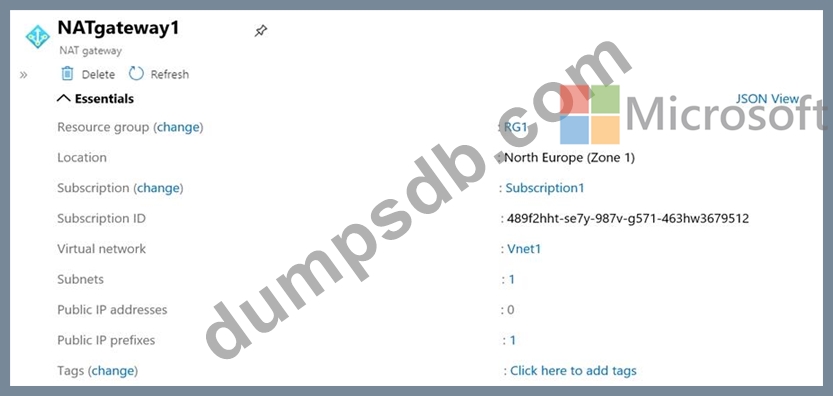
You have the virtual machine shown in the VM1 exhibit.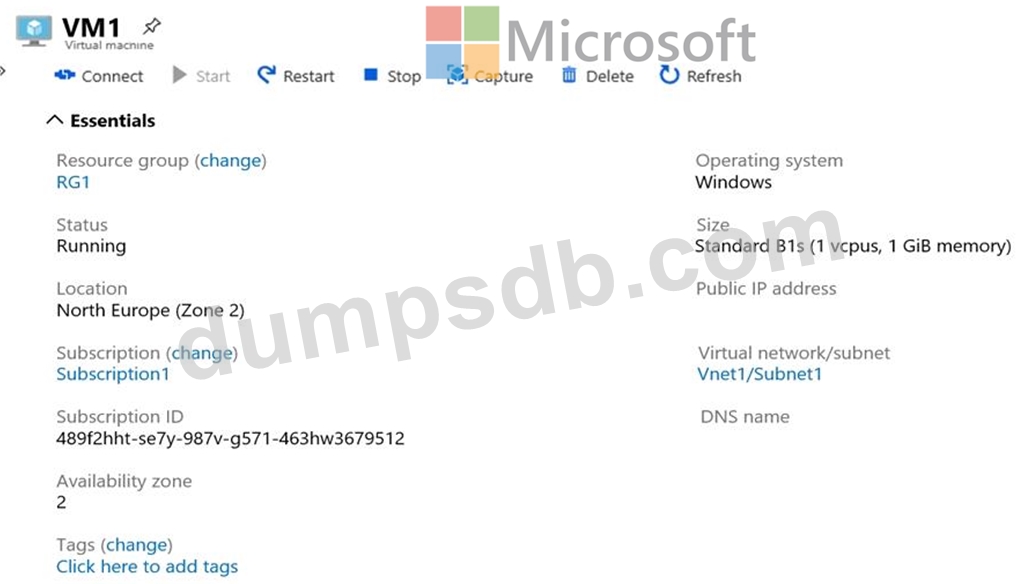
Subnet1 is configured as shown in the Subnet1 exhibit.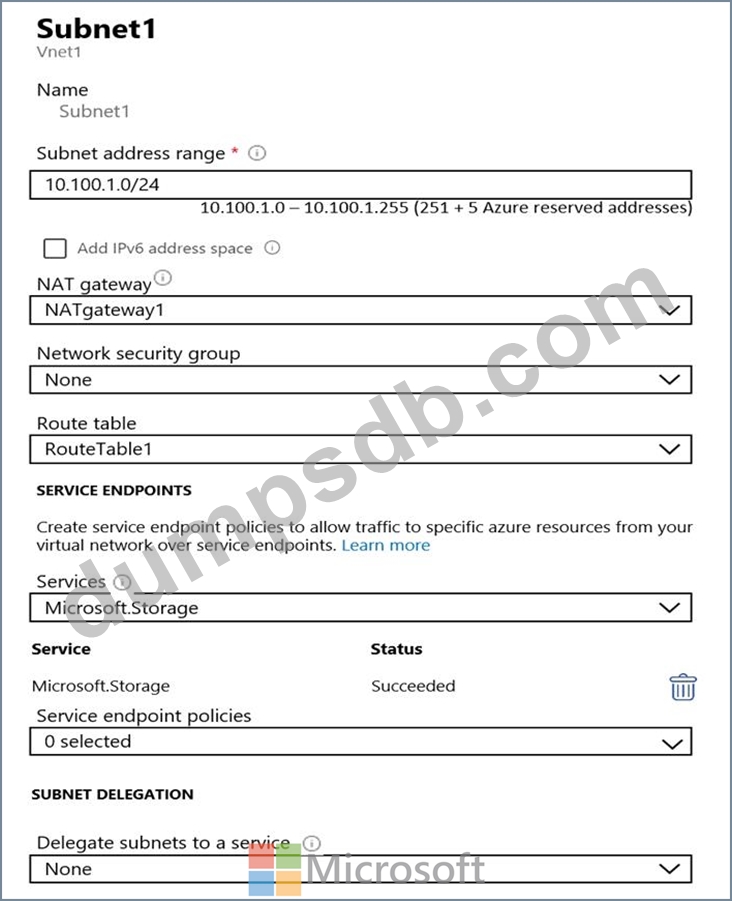
For each of the following statements, select Yes of the statement is true. Otherwise, select No.
NOTE: Each correct selection is worth one point.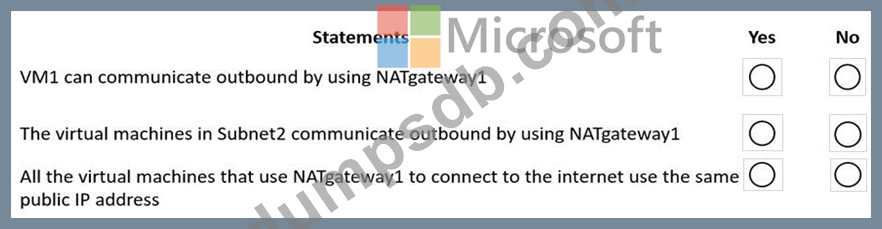

Question 175
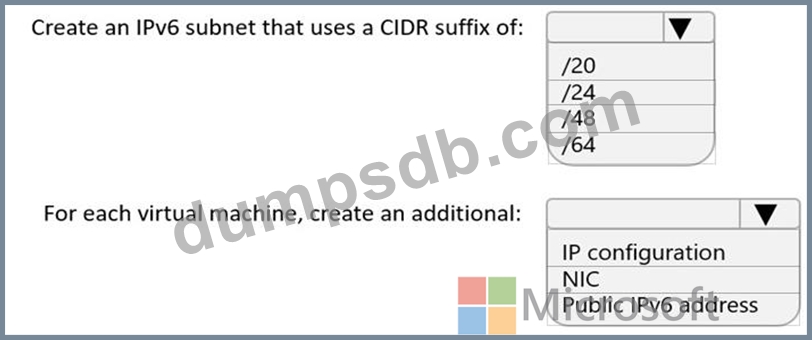
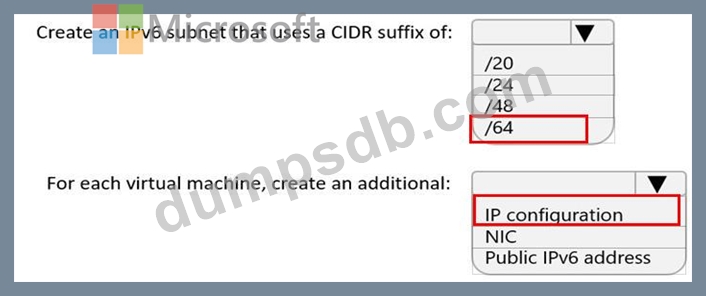
Your company has an Azure virtual network named Vnet1 that uses an IP address space of 192.168.0.0/20. Vnet1 contains a subnet named Subnet1 that uses an IP address space of 192.168.0.0/24.
You create an IPv6 address range to Vnet1 by using a CIDR suffix of /48.
You need to enable the virtual machines on Subnet1 to communicate with each other by using IPv6 addresses assigned by the company. The solution must minimize the number of additional IPv4 addresses.
What should you do? To answer, select the appropriate options in the answer area.
NOTE: Each correct selection is worth one point.