

Question 21
Say, there is a legacy CRM system called CRM-Z which is offering below functions:
1. Customer creation
2. Amend details of an existing customer
3. Retrieve details of a customer
4. Suspend a customer
Question 22
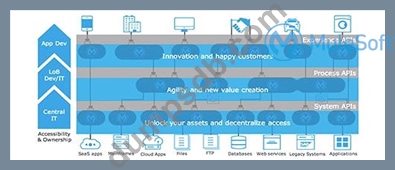
What is typically NOT a function of the APIs created within the framework called API-led connectivity?
Question 23
Refer to the exhibit.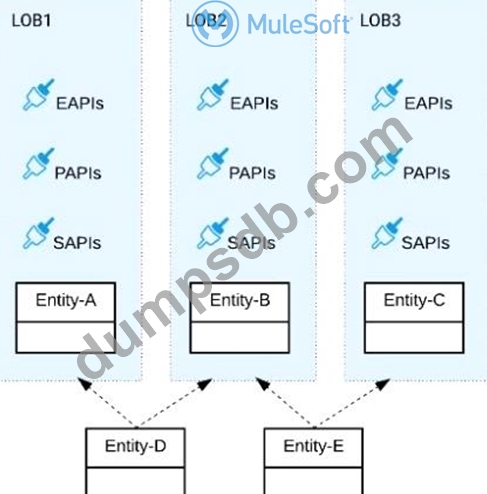
Three business processes need to be implemented, and the implementations need to communicate with several different SaaS applications.
These processes are owned by separate (siloed) LOBs and are mainly independent of each other, but do share a few business entities. Each LOB has one development team and their own budget In this organizational context, what is the most effective approach to choose the API data models for the APIs that will implement these business processes with minimal redundancy of the data models?
A) Build several Bounded Context Data Models that align with coherent parts of the business processes and the definitions of associated business entities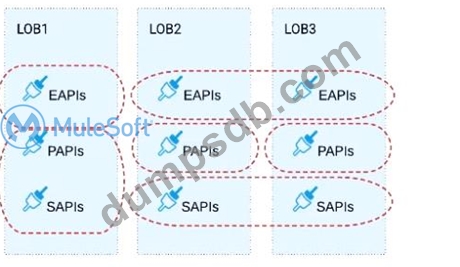
B) Build distinct data models for each API to follow established micro-services and Agile API-centric practices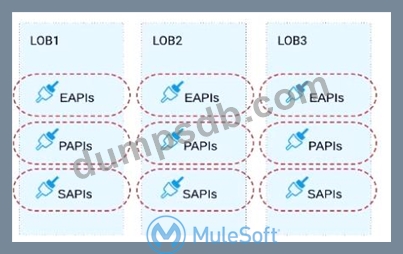
C) Build all API data models using XML schema to drive consistency and reuse across the organization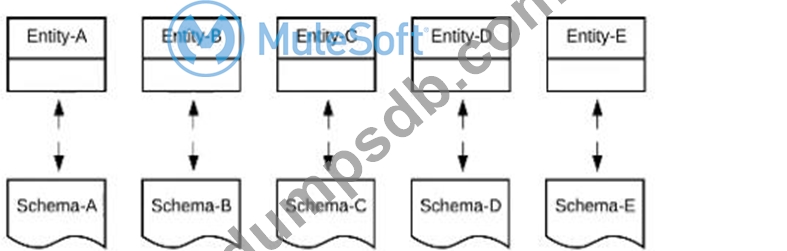
D) Build one centralized Canonical Data Model (Enterprise Data Model) that unifies all the data types from all three business processes, ensuring the data model is consistent and non-redundant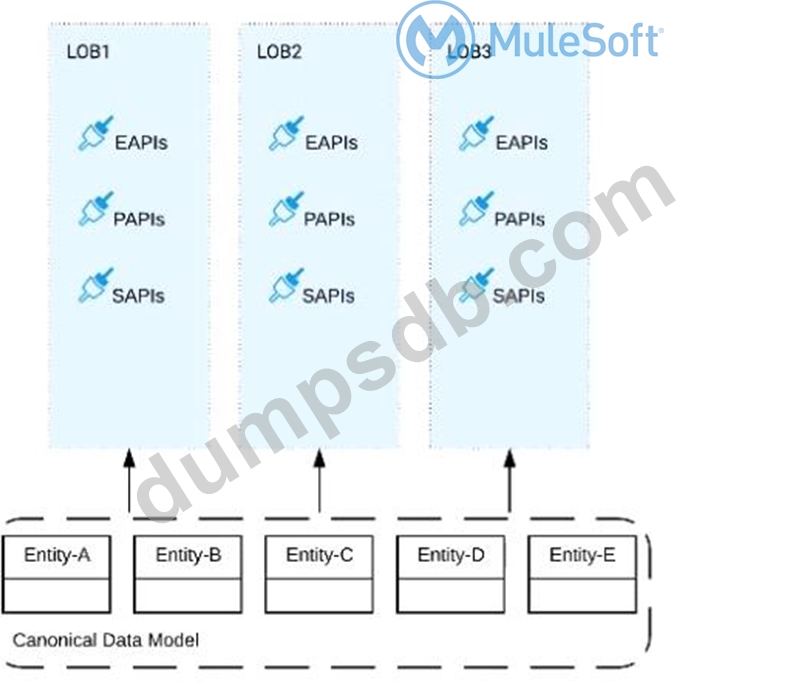
Question 24
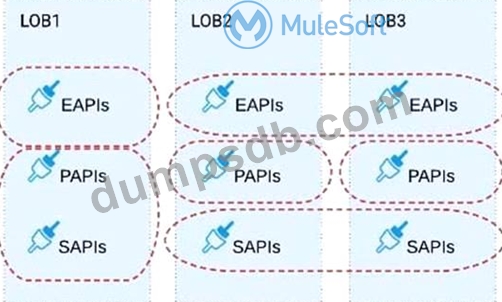
Select the correct Owner-Layer combinations from below options
Question 25
An Order API must be designed that contains significant amounts of integration logic and involves the invocation of the Product API.
The power relationship between Order API and Product API is one of "Customer/Supplier", because the Product API is used heavily throughout the organization and is developed by a dedicated development team located in the office of the CTO.
What strategy should be used to deal with the API data model of the Product API within the Order API?