

Question 1
Given the code fragment:
List<Integer> codes = Arrays.asList (10, 20);
UnaryOperator<Double> uo = s -> s +10.0;
codes.replaceAll(uo);
codes.forEach(c -> System.out.println(c));
What is the result?
Question 2
Given: What is the result?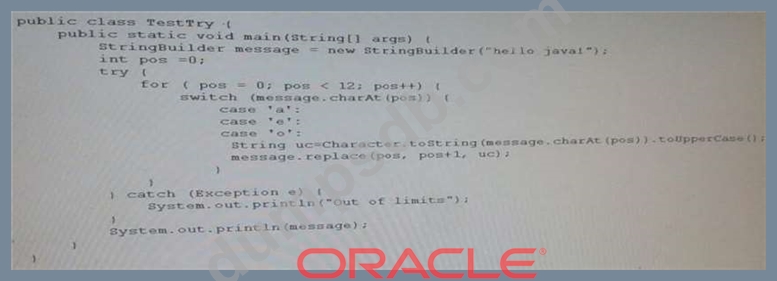
Question 3
Given the definition of the Country class:
public class country {
public enum Continent {ASIA, EUROPE}
String name;
Continent region;
public Country (String na, Continent reg) {
name = na, region = reg;
}
public String getName () {return name;}
public Continent getRegion () {return region;}
}
and the code fragment:
List<Country> couList = Arrays.asList (
new Country ("Japan", Country.Continent.ASIA),
new Country ("Italy", Country.Continent.EUROPE),
new Country ("Germany", Country.Continent.EUROPE));
Map<Country.Continent, List<String>> regionNames = couList.stream ()
.collect(Collectors.groupingBy (Country ::getRegion,
Collectors.mapping(Country::getName, Collectors.toList()))));
System.out.println(regionNames);
What is the output?
Question 4
Given the definition of the Employee class: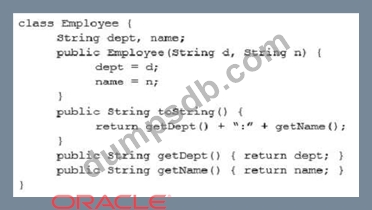
and this code fragment: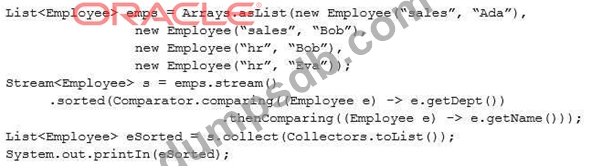
What is the result?
Question 5
Given the code fragment:
Stream<Path> files = Files.walk(Paths.get(System.getProperty(“user.home”))); files.forEach (fName -> { //line n1 try { Path aPath = fName.toAbsolutePath(); //line n2 System.out.println(fName + “:”
+ Files.readAttributes(aPath,
Basic.File.Attributes.class).creationTime
());
} catch (IOException ex) {
ex.printStackTrace();
});
What is the result?