

Question 171
Gary is the project manager of his organization. He is managing a project that is similar to a project his organization completed recently. Gary has decided that he will use the information from the past project to help him and the project team to identify the risks that may be present in the project. Management agrees that this checklist approach is ideal and will save time in the project. Which of the following statement is most accurate about the limitations of the checklist analysis approach for Gary?
Question 172
Your project spans the entire organization. You would like to assess the risk of the project but are worried that some of the managers involved in the project could affect the outcome of any risk identification meeting. Your worry is based on the fact that some employees would not want to publicly identify risk events that could make their supervisors look bad. You would like a method that would allow participants to anonymously identify risk events. What risk identification method could you use?
Question 173
A formal analysis is completed on a major change to a research and development (R&D) program at a risk- averse corporation. This analysis includes a detailed review of the risk exposure and monetary funds required to take appropriate actions as needed. The risks included cost, labor, materials, communication, IT, and facilities. Within the entire project portfolio, management only has US$995,000 for R&D projects. All inclusive, detailed breakout of budget analysis is as follows: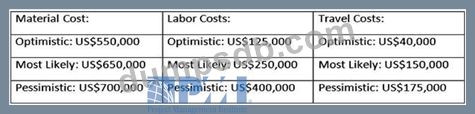
What should he risk manager propose to the review board as a recommendation based on the information above?
Question 174
Which analysis method uses stratified sampling without replacement?
Question 175
During qualitative risk analysis you want to define the risk urgency assessment. All of the following are indicators of risk priority except for which one?