

Question 136
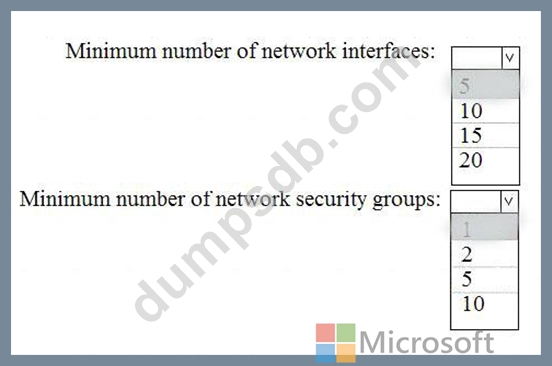
You plan to deploy five virtual machines to a virtual network subnet.
Each virtual machine will have a public IP address and a private IP address.
Each virtual machine requires the same inbound and outbound security rules.
What is the minimum number of network interfaces and network security groups that you require? To answer, select the appropriate options in the answer area.
NOTE: Each correct selection is worth one point.

Question 137
You have a resource group named RG5. The access controls for RG5 are configured as shown in the following exhibit.
Which users can deploy virtual networks to RG5?
Question 138
You have an Azure subscription that contains the storage accounts shown in the following table.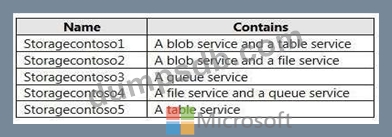
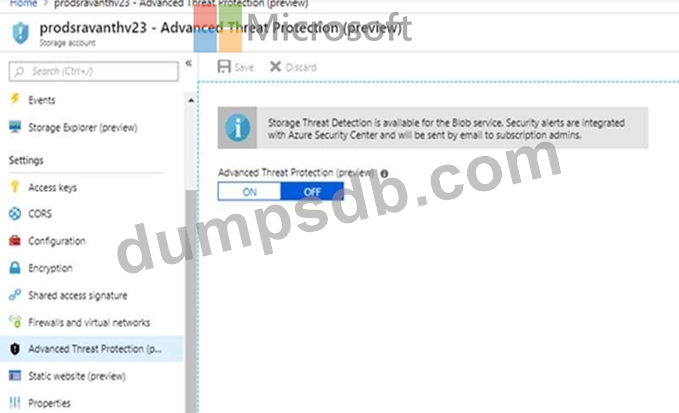
You enable Storage Advanced Threat Protection (ATP) for all the storage accounts.
You need to identify which storage accounts will generate Storage ATP alerts.
Which two storage accounts should you identify? Each correct answer presents part of the solution.
NOTE: Each correct selection is worth one point.
Question 139
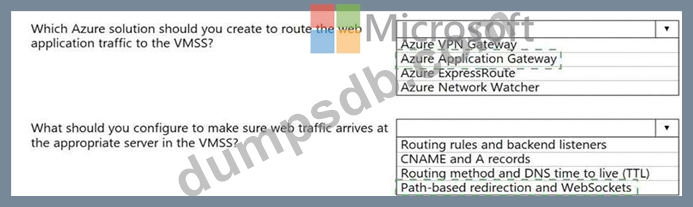
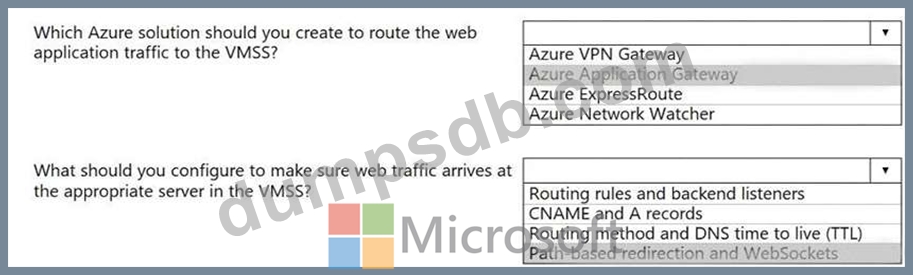
Your company hosts multiple websites by using Azure virtual machine scale sets (VMSS) that run Internet Information Server (IIS).
All network communications must be secured by using end to end Secure Socket Layer (SSL) encryption.
User sessions must be routed to the same server by using cookie-based session affinity.
The image shown depicts the network traffic flow for the websites to the VMSS.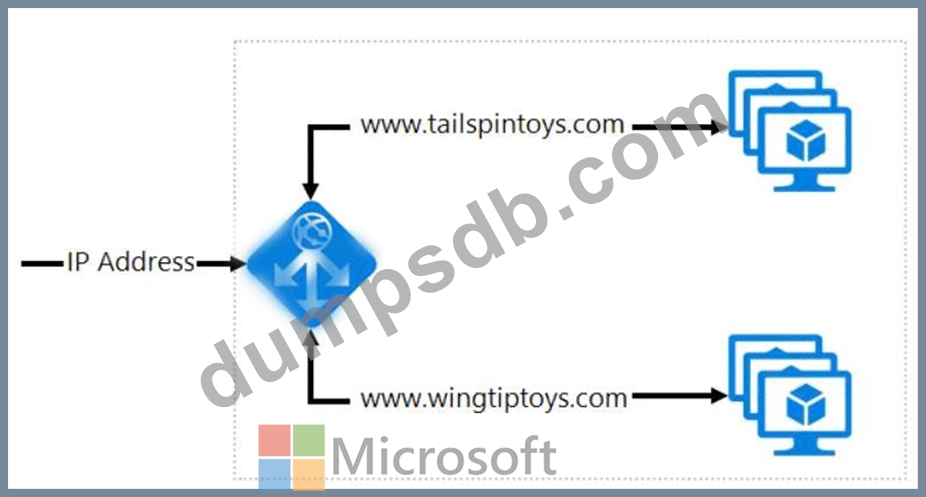
Use the drop-down menus to select the answer choice that answers each question.
NOTE: Each correct selection is worth one point.
Question 140
A company hosts virtual machines (VMs) in an on-premises datacenter and in Azure. The on-premises and Azure-based VMs communicate using ExpressRoute.
The company wants to be able to continue regular operations if the ExpressRoute connection fails. Failover connections must use the Internet and must not require Multiprotocol Label Switching (MPLS) support.
You need to recommend a solution that provides continued operations.
What should you recommend?