

Question 141
SIMULATION
Click to expand each objective. To connect to the Azure portal, type https://portal.azure.com in the browser address bar.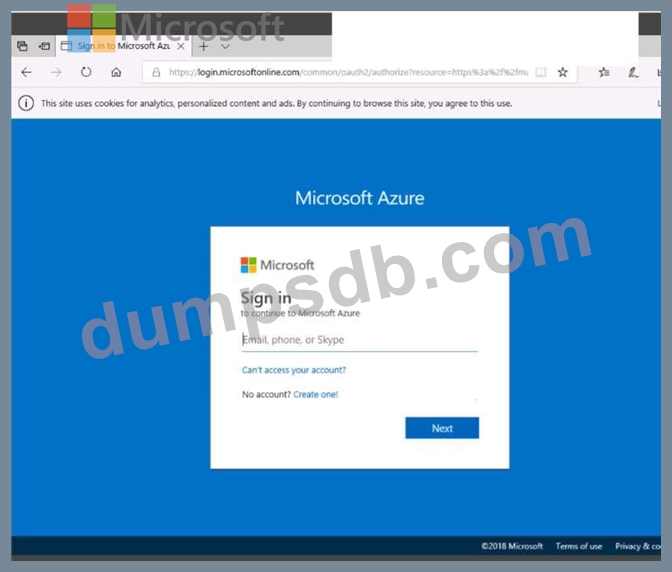
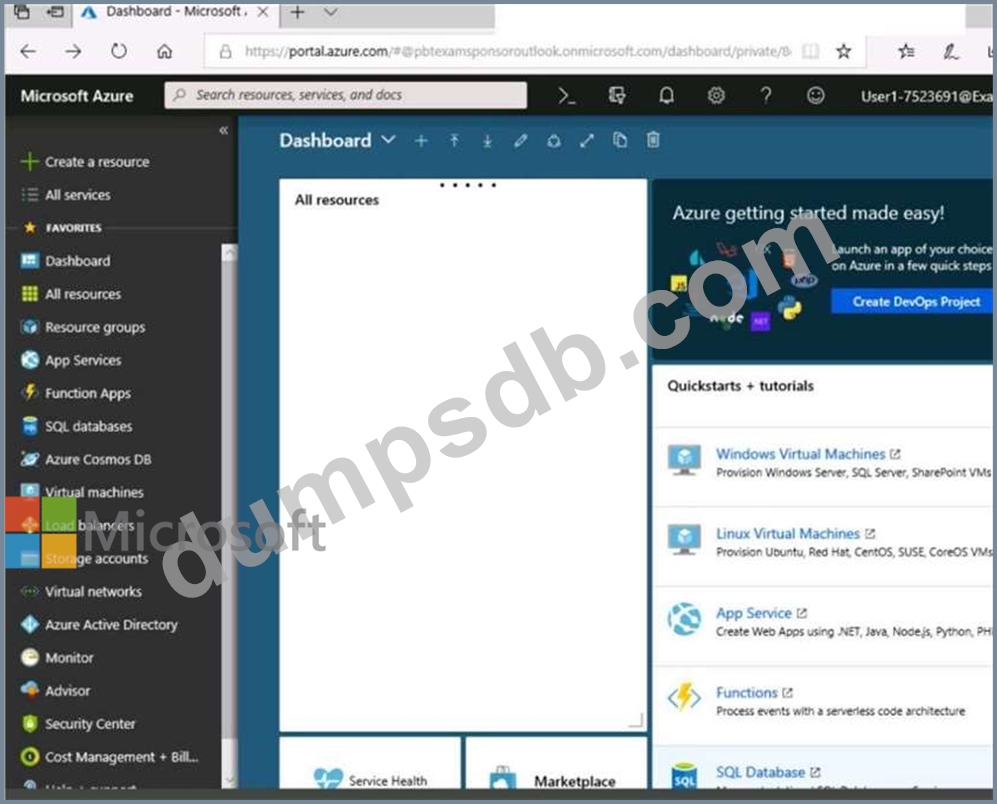
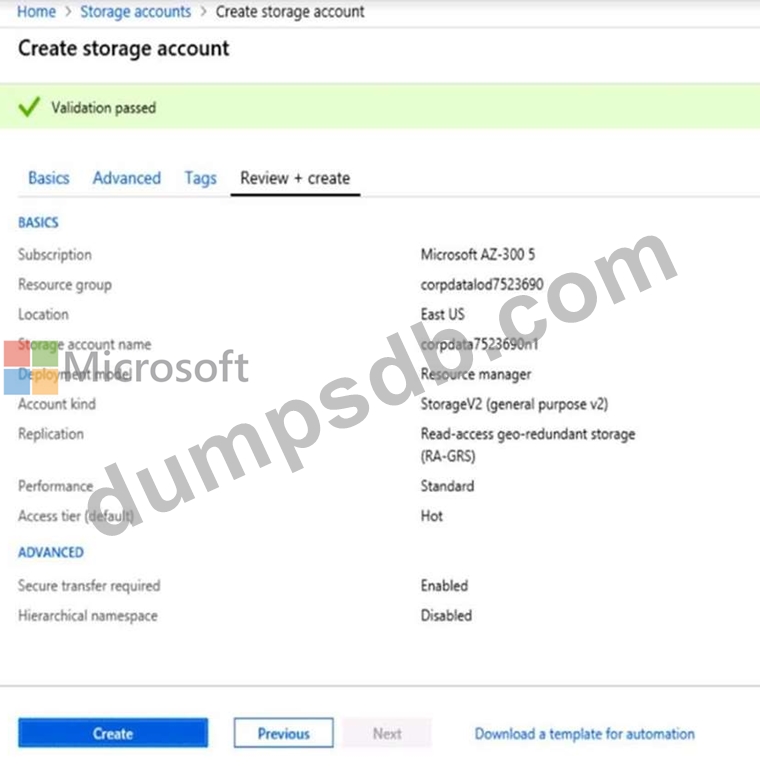
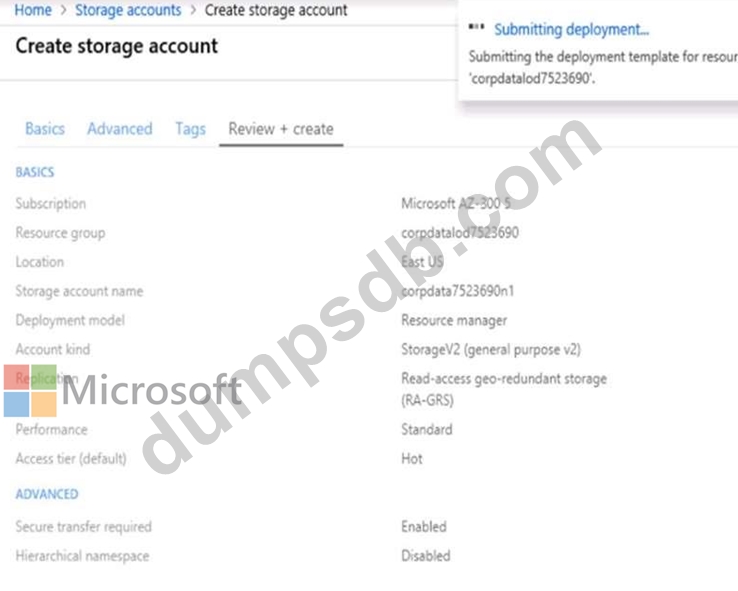
When you are finished performing all the tasks, click the 'Next' button.
Note that you cannot return to the lab once you click the 'Next' button. Scoring occur in the background while you complete the rest of the exam.
Overview
The following section of the exam is a lab. In this section, you will perform a set of tasks in a live environment.
While most functionality will be available to you as it would be in a live environment, some functionality (e.g., copy and paste, ability to navigate to external websites) will not be possible by design.
Scoring is based on the outcome of performing the tasks stated in the lab. In other words, it doesn't matter how you accomplish the task, if you successfully perform it, you will earn credit for that task.
Labs are not timed separately, and this exam may have more than one lab that you must complete. You can use as much time as you would like to complete each lab. But, you should manage your time appropriately to ensure that you are able to complete the lab(s) and all other sections of the exam in the time provided.
Please note that once you submit your work by clicking the Next button within a lab, you will NOT be able to return to the lab.
To start the lab
You may start the lab by clicking the Next button.
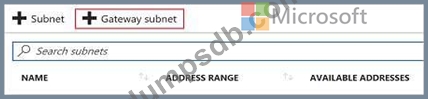
You plan to deploy an application gateway named appgw1015 to load balance internal IP traffic to the Azure virtual machines connected to subnet0.
You need to configure a virtual network named VNET1015 to support the planned application gateway.
What should you do from the Azure portal?
Question 142
You plan to create an Azure Storage account named storage1 that will store blobs and be accessed by Azure Databricks.
You need to ensure that you can set permissions for individual blobs by using Azure Active Directory (Azure AD) authentication.
Which Advanced setting should you enable for storage1?
Question 143
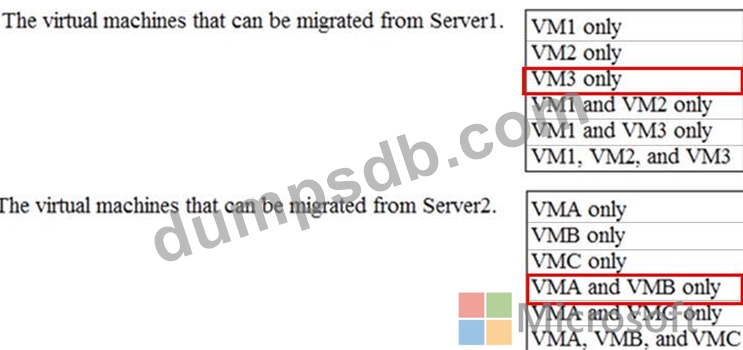
Your company has a virtualization environment that contains the virtualization hosts shown in the following table.
The virtual machines are configured as shown in the following table.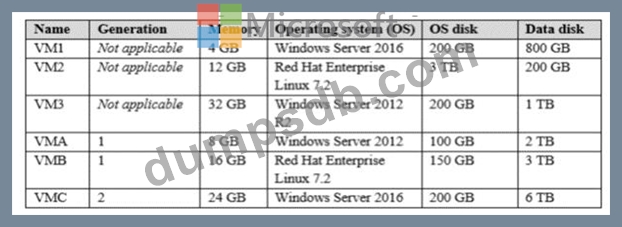
All the virtual machines use basic disks. VM1 is protected by using BitLocker Drive Encryption (BitLocker).
You plan to migrate the virtual machines to Azure by using Azure Site Recovery.
You need to identify which virtual machines can be migrated.
Which virtual machines should you identify for each server? To answer, select the appropriate options in the answer area.
NOTE: Each correct selection is worth one point.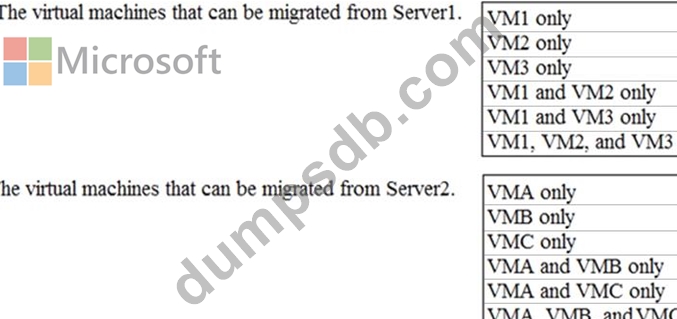
Question 144
HOTSPOT
You have an Azure subscription named Subscription1.
Subscription1 contains the virtual machines in the following table.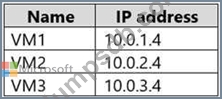
Subscription1 contains a virtual network named VNet1 that has the subnets in the following table.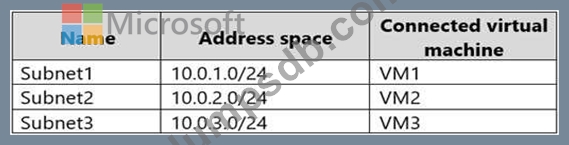
VM3 has a network adapter named NIC3. IP forwarding is enabled on NIC3. Routing is enabled on VM3.
You create a route table named RT1 that contains the routes in the following table.
You apply RT1 to Subnet1 and Subnet2.
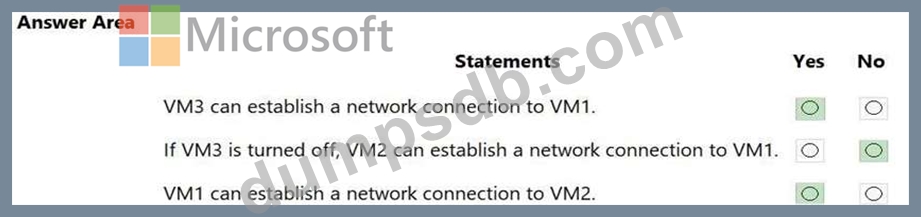
For each of the following statements, select Yes if the statement is true. Otherwise, select No.
NOTE: Each correct selection is worth one point.
Hot Area: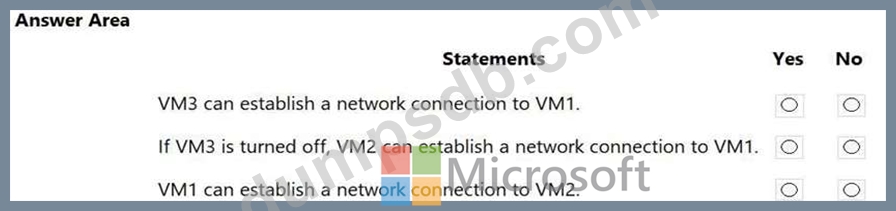
Question 145
You are developing an app that references data which is sharded across multiple Azure SQL databases.
The app must guarantee transactional consistency for changes across several different sharding key values.
You need to manage the transactions.
What should you implement?