Question 21
注:この質問は同じシナリオを提示する一連の質問の一部です。の各質問
シリーズは述べられた目的を満たすかもしれないユニークな解決策を含みます。いくつかの質問セット
他の人が正しい解決策を持っていないかもしれない間、複数の正しい解決策を持っています。
このセクションで質問に答えた後は、それに戻ることはできません。その結果、
質問はレビュー画面に表示されません。
Microsoft 365テナントがあります。 Microsoft AzureでCompanyConfidentialというラベルを作成します。
情報保護
CompanyConfidentialをグローバルポリシーに追加します。
ユーザーはCompanyConfidentialを使用して電子メールメッセージを保護し、ラベルを複数の外部ユーザーに送信します。
受信者外部の受信者は、電子メールメッセージを開くことができないと報告しています。
外部の受信者が自分に送信された保護された電子メールメッセージを開くことができることを確認する必要があります。
解決策:グローバルポリシーに新しいラベルを作成し、電子メールメッセージを再送信するようにユーザに指示します。
これは目標を達成していますか?
Question 22
You have a Microsoft 365 subscription that include three users named User1, User2, and User3.
A file named File1.docx is stored in Microsoft OneDrive. An automated process updates File1.docx every minute.
You create an alert policy named Policy1 as shown in the following exhibit.
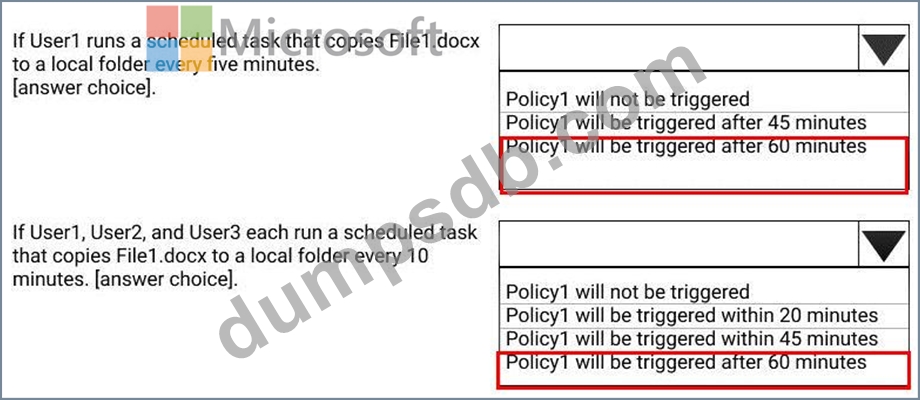
Use the drop-down menus to select the answer choice that completes each statement based on the information presented in the graphic.
NOTE: Each correct selection is worth one point.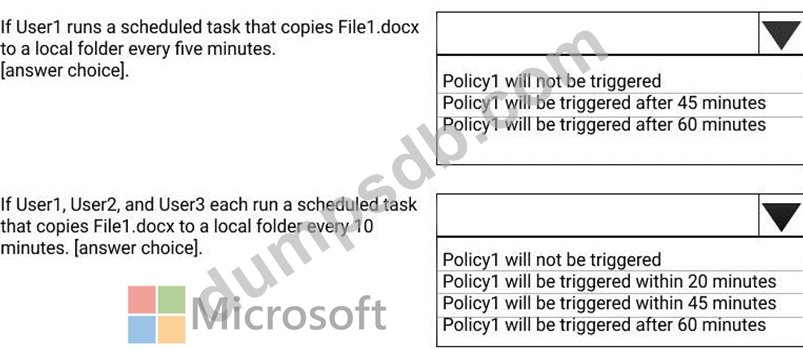
Question 23
You have a Microsoft 365 subscription. All users use Microsoft Exchange Online.
Microsoft 365 is configured to use the default policy settings without any custom rules.
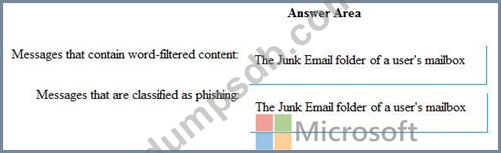
You manage message hygiene.
Where are suspicious email messages placed by default? To answer, drag the appropriate location to the correct message types. Each location may be used once, more than once, or not at all. You may need to drag the split bar between panes or scroll to view content.

Question 24
You have a Microsoft 365 subscription.
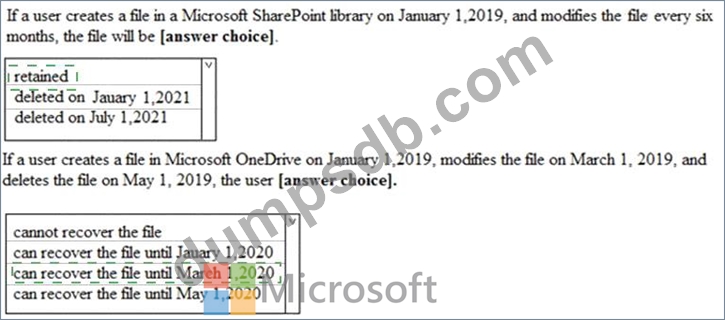
You are creating a retention policy named Retention1 as shown in the following exhibit.
You apply Retention1 to SharePoint sites and OneDrive accounts.
Use the drop-down menus to select the answer choice that completes each statement based on the information presented in the graphic.
NOTE: Each correct selection is worth one point.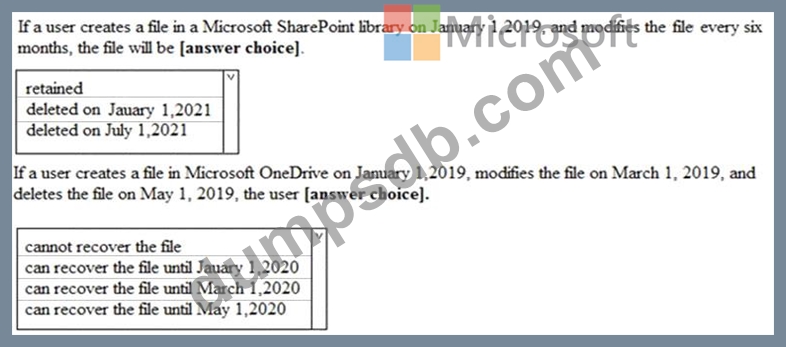

Question 25
You have a Microsoft Azure Active Directory (Azure AD) tenant named contoso.com that contains the users shown in the following table.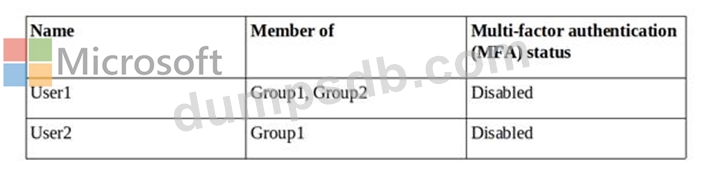
You create and enforce an Azure AD Identity Protection sign-in risk policy that has the following settings:
* Assignments: Include Group1, Exclude Group2
* Conditions: Sign in risk of Low and above
* Access: Allow access, Require password multi-factor authentication
You need to identify how the policy affects User1 and User2.
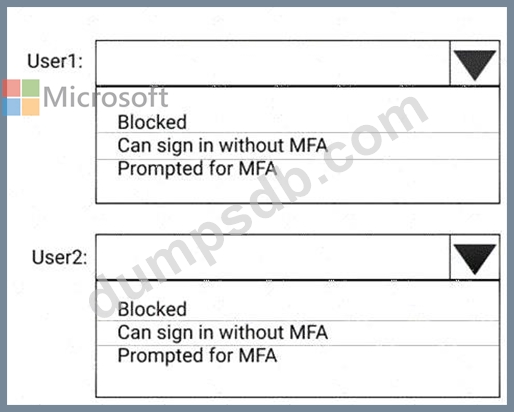
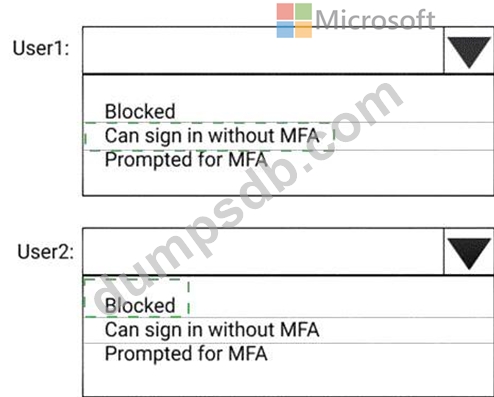
What occurs when each user signs in from an anonymous IP address? To answer, select the appropriate options in the answer area.
NOTE: Each correct selection is worth one point.