

Question 51
When designing an upstream API and its implementation, the development team has been advised to NOT set timeouts when invoking a downstream API, because that downstream API has no SLA that can be relied upon.
This is the only downstream API dependency of that upstream API.
Assume the downstream API runs uninterrupted without crashing. What is the impact of this advice?
Question 52
A Mule application exposes an HTTPS endpoint and is deployed to the CloudHub Shared Worker Cloud. All traffic to that Mule application must stay inside the AWS VPC.
To what TCP port do API invocations to that Mule application need to be sent?
Question 53
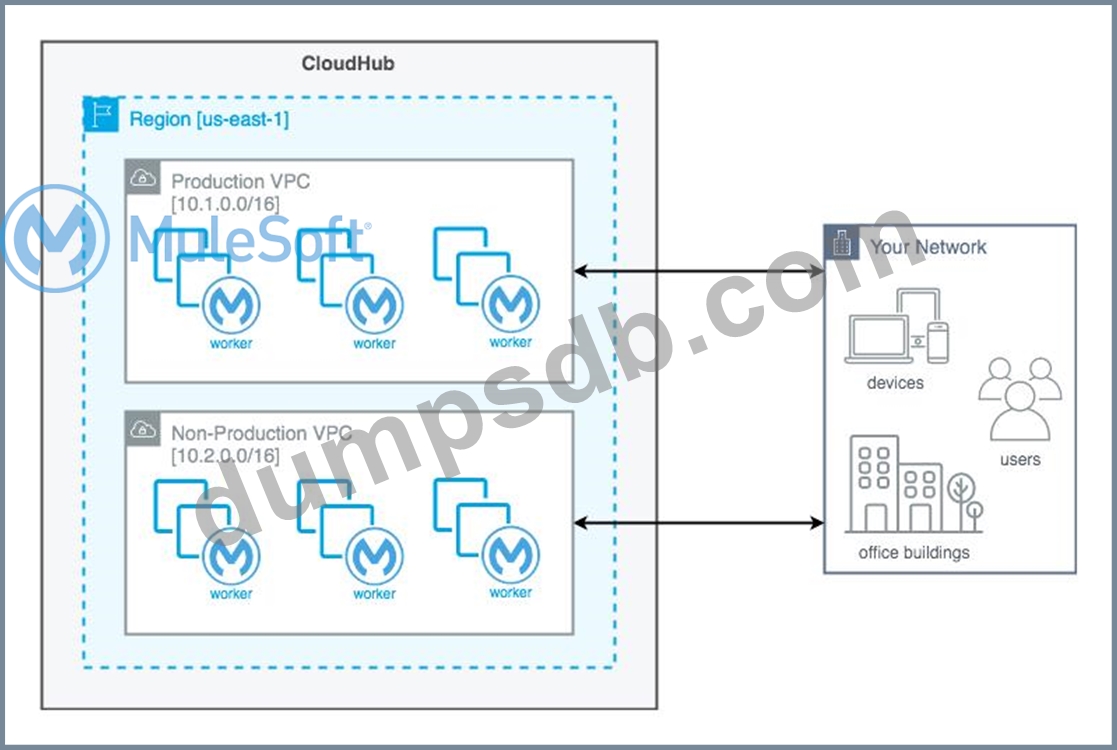
A company requires Mule applications deployed to CloudHub to be isolated between non-production and production environments. This is so Mule applications deployed to non-production environments can only access backend systems running in their customer-hosted non-production environment, and so Mule applications deployed to production environments can only access backend systems running in their customer-hosted production environment. How does MuleSoft recommend modifying Mule applications, configuring environments, or changing infrastructure to support this type of per-environment isolation between Mule applications and backend systems?
Question 54
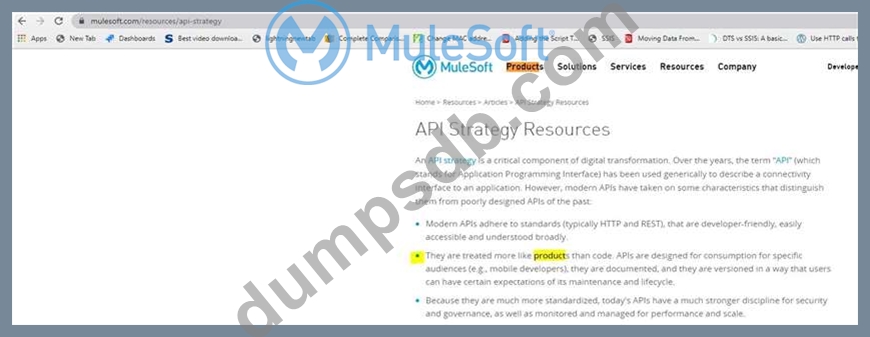
An organization makes a strategic decision to move towards an IT operating model that emphasizes consumption of reusable IT assets using modern APIs (as defined by MuleSoft).
What best describes each modern API in relation to this new IT operating model?
Question 55
How are an API implementation, API client, and API consumer combined to invoke and process an API?