

Question 11
Micro - Matching
1. Upper left image
Multi-celled, rough walled macroconidia with a tapered terminal cell
2. Upper right image
Dense aggregates of echinulate, brown-black conidia
3. Lower left image
Loose clusters of elliptical conidia arranged in a "diphtheroid" pattern
4. Lower right image
Chains of large, lemon-shaped annelloconidia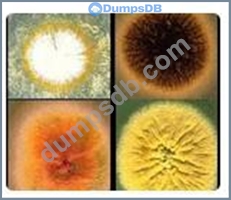
Question 12
Which EBV markers would be MOST likely positive for an individual who had infectious mononucleosis 9 years ago?
Question 13
Each of the drugs/drug classes listed above have been known to cause drug-induced hemolytic anemia, although cephalosporins are the MOST COMMON cause. Cephalosporins can cause drug-induced hemolytic anemia when a patient produces antibodies to the particular cephalosporin drug in the presence of red blood cells. The drugs can alter the membrane appearance of the red blood cells, causing the body to mistake them as foreign. Complement becomes activated due to these antibodies; red cells are then destroyed causing hemolytic anemia. Dark urine, caused by intravascular hemolysis, is one of the most common symptoms associated with this condition.
Which one of the following drugs/drug classes is the MOST COMMON cause of drug-induced hemolytic anemia?
Question 14
The role of the laboratory supervisor or manager is to
Question 15
Which advancement in clinical science occurred during the second half of the twentieth century?