

Question 46
Refer to the exhibit. An organization is running a Mule standalone runtime and has configured Active Directory as the Anypoint Platform external Identity Provider. The organization does not have budget for other system components.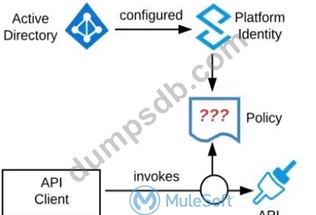
What policy should be applied to all instances of APIs in the organization to most effecuvelyKestrict access to a specific group of internal users?
Question 47
A system API is deployed to a primary environment as well as to a disaster recovery (DR) environment, with different DNS names in each environment. A process API is a client to the system API and is being rate limited by the system API, with different limits in each of the environments. The system API's DR environment provides only 20% of the rate limiting offered by the primary environment. What is the best API fault-tolerant invocation strategy to reduce overall errors in the process API, given these conditions and constraints?
Question 48
Refer to the exhibit.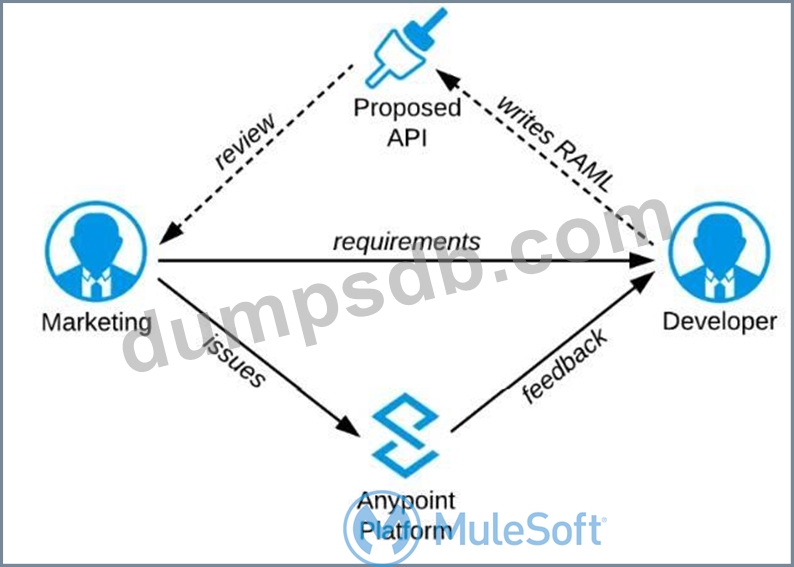
A RAML definition has been proposed for a new Promotions Process API, and has been published to Anypoint Exchange.
The Marketing Department, who will be an important consumer of the Promotions API, has important requirements and expectations that must be met.
What is the most effective way to use Anypoint Platform features to involve the Marketing Department in this early API design phase?
A) Ask the Marketing Department to interact with a mocking implementation of the API using the automatically generated API Console
B) Organize a design workshop with the DBAs of the Marketing Department in which the database schema of the Marketing IT systems is translated into RAML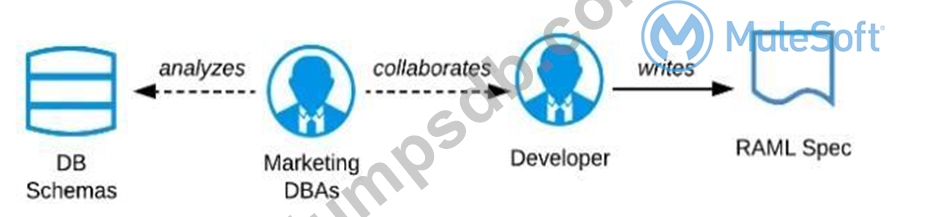
C) Use Anypoint Studio to Implement the API as a Mule application, then deploy that API implementation to CloudHub and ask the Marketing Department to interact with it
D) Export an integration test suite from API designer and have the Marketing Department execute the tests In that suite to ensure they pass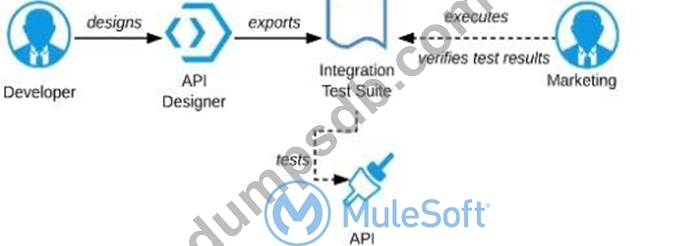
Question 49
When must an API implementation be deployed to an Anypoint VPC?
Question 50
An API implementation is being designed that must invoke an Order API, which is known to repeatedly experience downtime.
For this reason, a fallback API is to be called when the Order API is unavailable.
What approach to designing the invocation of the fallback API provides the best resilience?