

Question 26
A large B2C customer is planning to implement Salesforce CRM to become a Customer centric enterprise.
Below, is their current system landscape diagram.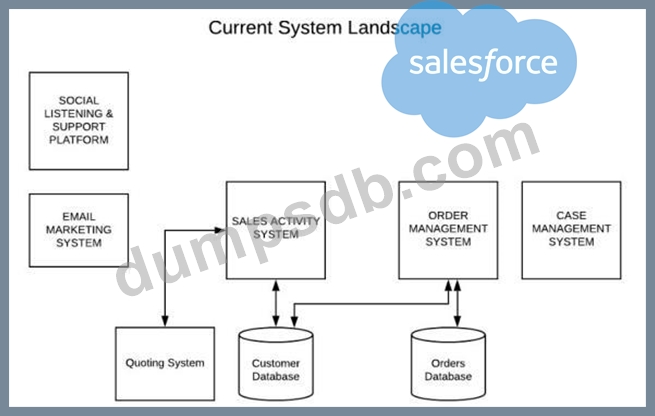
The goals for implementing Salesforce follows:
1. Develop a 360 view of customer
2. Leverage Salesforce capabilities for Marketing, Sales and Service processes
3. Reuse Enterprise capabilities built for Quoting andOrder Management processes Which three systems from the current system landscape can be retired with the implementation of Salesforce?
Choose 3 answers
Question 27
Universal Containers decided to use Salesforce Sales Cloud for their sales processes. Won Opportuinities must be sent to an external source for Order fulfillment. All lint items must also be sent, along with opportunities.
The ERP system has SOAP based web services orders. UC chose to use Apex callouts.
Which two design trade-offs must be taken into account when using Apex callouts to SOAP base web services?
Choose 2 answers
Question 28
An Enterprise Customer is planning to implement Salesforce to support case management. Below, is their current system landscape diagram.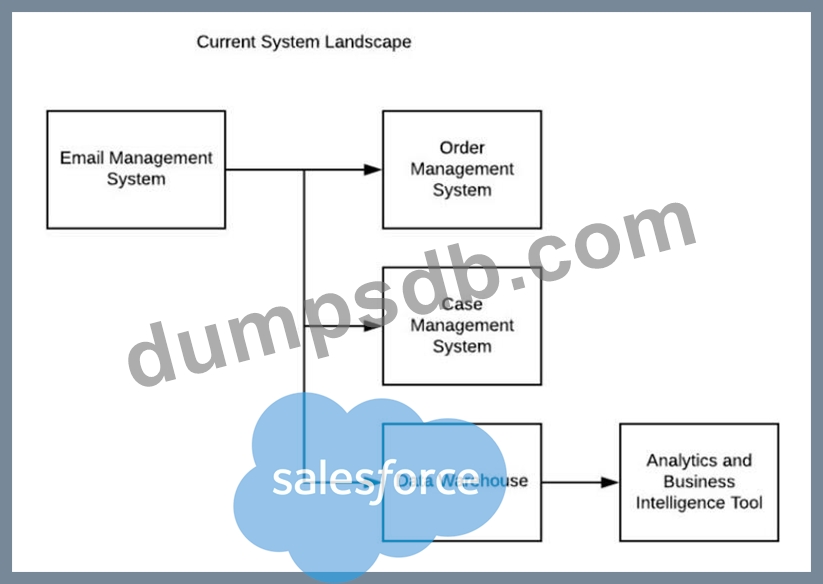
Considering Salesforce capabilities, what should the Integration Architect evaluate when integrating Salesforce with the current system landscape?
Question 29
What are two benefits an Integration Architect should consider when recommending web-to-lead?
Choose 2 answers
Question 30
Northern Trail Outfitters has had an increase in requests from other business units to integrate opportunity information with other systems from Salesforce. The developers have started writing asynchronous @future callouts directly into the target systems. The CIO is concerned about the viability of this approach scaling for future growth and has requested a solution recommendation.
What should be done to mitigate the concerns that the CIO has?