

Question 81
An LTM Specialist has just manually failed the active LTM device over to the standby LTM device.
The LTM Specialist notices the newly active LTM device is NOT currently receiving traffic. The LTM Specialist verifies the newly active device is responding to ARP but still no traffic is hitting the virtual servers. The LTM Specialist also notices that the virtual servers eventually start responding.
What should be added to the configuration to resolve the problem?
Question 82
-- Exhibit - -- Exhibit -
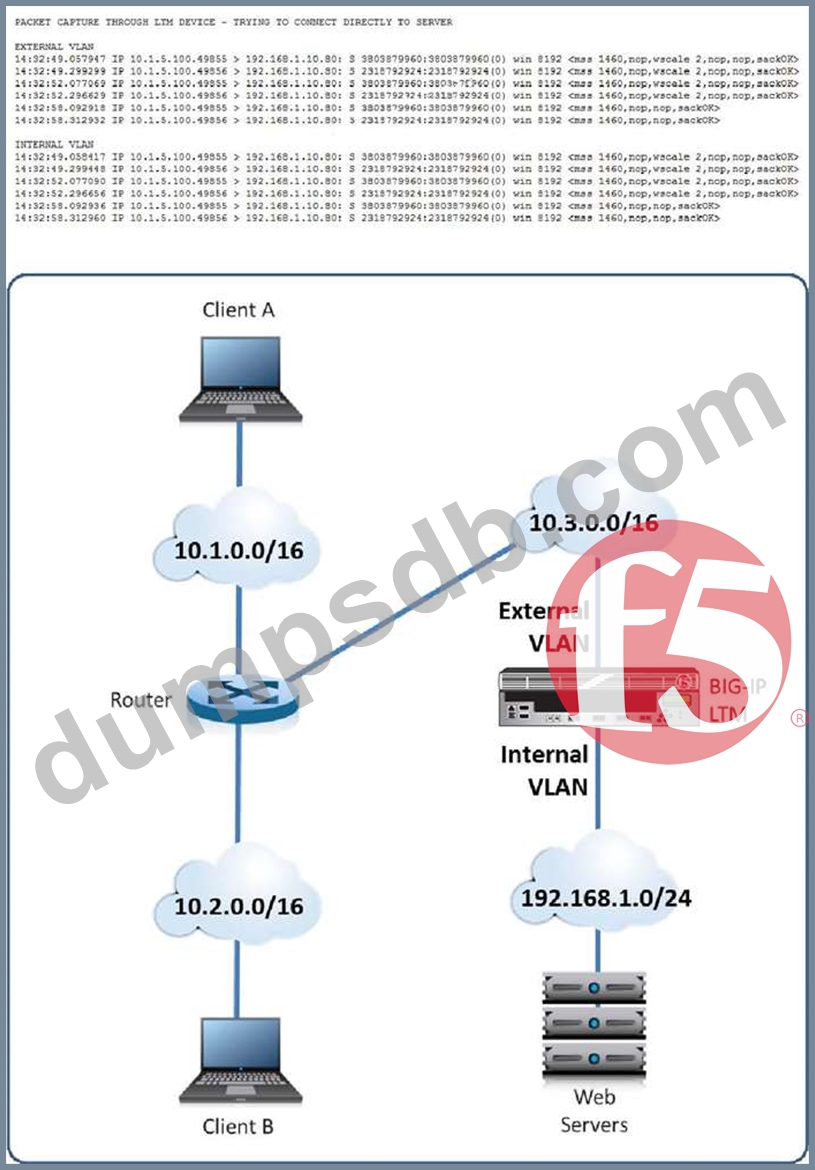
Refer to the exhibits.
Users are able to access the application when connecting to the virtual server but are unsuccessful when connecting directly to the application servers. The LTM Specialist wants to allow direct access to the application servers.
Why are users unable to connect directly to the application servers?
Question 83
-- Exhibit -

-- Exhibit --
Refer to the exhibits.
When observing the AVR statistics for the HTTPS_VS, an LTM Specialist realizes that HTTP status codes are NOT being recorded.
How should the LTM Specialist modify the configuration to record the HTTP status codes?
Question 84
-- Exhibit-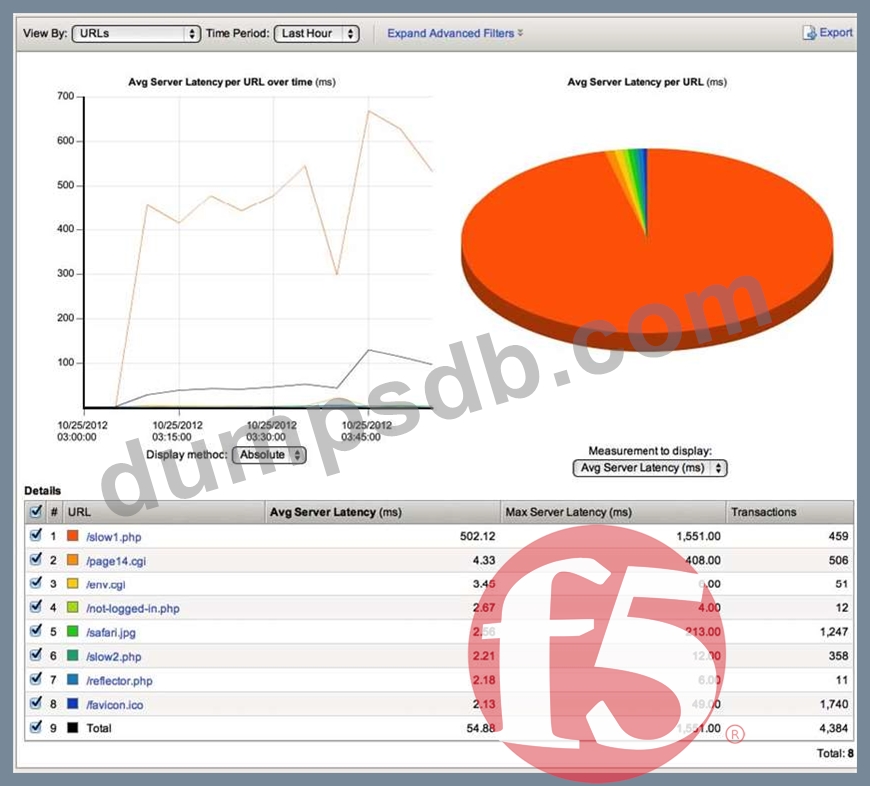

-- Exhibit --
Refer to the exhibits.
Which URL on which server is causing the highest latency for users?
Question 85
The pool members are serving up simple static web content.
The current virtual server configuration is given as follows: tmsh list ltm virtual simple
ltm virtual simple { destination 10.10.10.10:80 ip-protocol tcp mask 255.255.255.255 profiles { http { } httpcompression { } oneconnect { } tcp { } } snat automap vlans-disabled
}
tmsh list ltm pool simple_pool ltm pool simple_pool { members {
10.10.10.11:80 { address 10.10.10.11 }
10.10.10.12:80
{ address 10.10.10.12 }
10.10.10.12:80
{ address 10.10.10.13 } }
}
Which three objects in the virtual server configuration can be removed without disrupting functionality of the virtual server? (Choose three.)